
 1.
Method planning
Knowledge of what lies below ground affects project cost and the selection of the system to be used.
Trenchless Technologies
Technical information to reduce risks before trenchless installation, rehabilitation or repair work.
← Back to technologies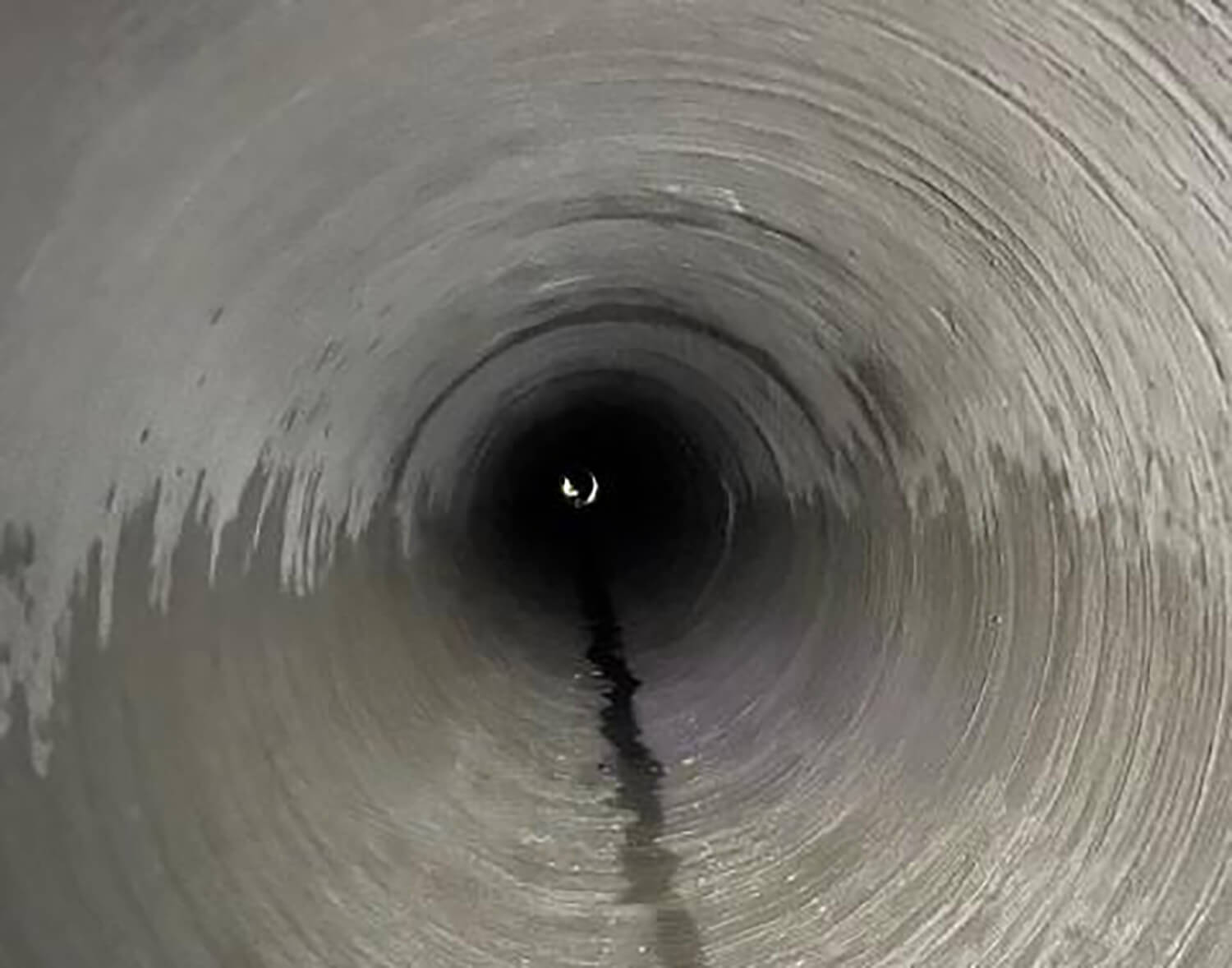
Careful field surveys and investigations are essential to civil engineering projects, especially underground works, where the risk of encountering unforeseen conditions is considerably higher.
1.
Knowledge of what lies below ground affects project cost and the selection of the system to be used.
 2.
For rehabilitation and repairs, information is needed on diameter, shape, alignment, network condition, fittings, service connections and manholes.
 3.
For new installations, soil and groundwater conditions and the location of distribution, collection and other utility networks are important.
The range of techniques available today can significantly reduce the likelihood of major surprises during trenchless installation, rehabilitation or repair work.
Every system is designed for a specific set of conditions; no method has universal application. Although the surveys and investigations required vary considerably from one project to another, three broad groups can be identified.
For rehabilitation and repairs, accurate information is required about the diameter, shape, alignment and condition of the existing network, including fittings, connections and manholes.
For new installations, the main information required concerns soil and groundwater conditions, as well as the location of distribution, collection and other interfering networks.
Pipe bursting replacement requires information on the material and dimensions of the existing network, the nature of the surrounding soil and the position of the network relative to adjacent pipes and cables.
For rehabilitation projects, Closed-Circuit Television (CCTV) has long been a recognized survey tool. It first appeared around 1950 and became well established in the 1980s as modern electronics made highly reliable, high-performance and lower-cost equipment available.
Other inspection techniques, such as sonar and radar, can under suitable circumstances complement or replace information obtained using conventional CCTV systems.
Sonar is mainly used for underwater surveys, for example in pipes flowing above half full. In addition to identifying defects, it can provide quantitative information on pipe dimensions and sediment levels.
Systems are available to inspect a partially full pipe using a CCTV camera above the waterline and a sonar transducer below it. Radar may also be used from inside the pipe, particularly where external voids are suspected, because it can inspect beyond the pipe wall.
Concerns about sewer leakage and contamination of groundwater and aquifers have led some countries to focus on systems capable of testing the integrity of pipe joints.
Although dedicated joint testing and sealing systems are available, interest has also grown in systems that test joint watertightness during a conventional CCTV inspection, using equipment integrated with the camera or towed behind it.
For new installations, information about ground conditions can be obtained through conventional boreholes and geotechnical investigation.
In developed areas, one of the most important survey tools is the pipe and cable locator, which can detect metallic pipes, energized power cables and telecommunications cables.
Several types of locator are available; most use a transmitter to induce a signal in conductive pipes or cables that can then be tracked from the surface with a receiver.
Some pipe and cable detectors can also be used as bore-tracking devices together with directional or guided drilling machines.
Ground Penetrating Radar (GPR) systems have become easier to operate and can often detect non-metallic pipes, cables, leakage zones and underground discontinuities such as road construction layers or rock strata.
Trenchless Technologies
Browse the technologies presented by ABRATT and discover other solutions for underground networks.