
 1.
In-situ lining
The technique uses a resin-impregnated tube inserted and cured inside the existing pipeline.
Trenchless Technologies
A cured-in-place lining method using a resin-impregnated tube to rehabilitate existing pipelines.
← Back to technologies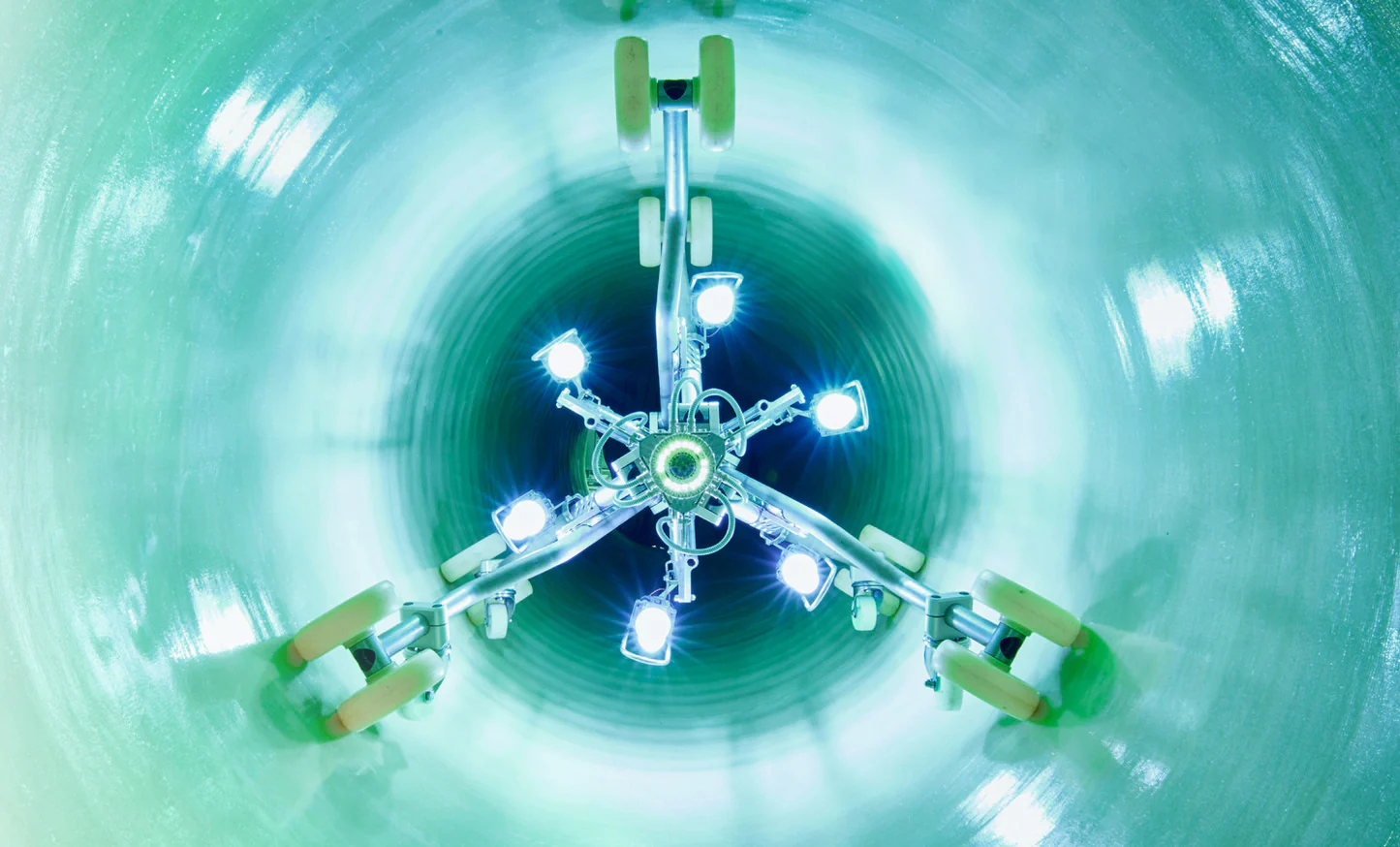
CIPP is a cured-in-place lining method in which a resin-impregnated fabric tube is inserted into the existing pipeline, inflated against the pipe wall and cured in place.
1.
The technique uses a resin-impregnated tube inserted and cured inside the existing pipeline.
 2.
The system creates a pipe within a pipe, with calculable structural strength and the ability to conform to the host pipe shape.
 3.
It can rehabilitate non-circular pipes, damaged sections, lateral connections and large-diameter pipelines.
The principal alternative to rigid pipe insertion and its variations is cured-in-place lining, also known as in-situ lining, soft lining or cured-in-place pipe, commonly abbreviated as CIPP.
For more than two decades, CIPP has dominated the rehabilitation market for non-man-entry sewers in many countries and includes a range of lining systems cured within the host pipe.
Although suppliers do not all use the same terminology, these methods are referred to here as CIPP systems.
Although several competing systems are available, they share the use of a fabric tube impregnated with epoxy or polyester resin.
The tube is inserted into the existing pipeline, inflated against the host pipe wall and cured at ambient temperature or, more commonly, using recirculated steam or hot water.
Some variants use ultraviolet light to cure the resin.
CIPP systems create a close-fitting pipe within a pipe, with calculable structural strength and the ability to be designed for different loading conditions.
The ring stiffness of the liner is increased by resistance from the existing pipeline and adjacent soil.
For systems designed for gravity pipelines, design is not necessarily based on a structural relationship between the final liner and the host pipe.
Systems that make use of the existing pipe to provide part of the structural support are sometimes known as interactive lining systems.
In addition to minimizing diameter reduction, an inherent advantage of CIPP is its ability to conform to almost any pipe shape.
This makes rehabilitation of non-circular pipelines possible.
Provided the perimeter is measured correctly and significant shrinkage does not occur during curing, the result is a close-fitting liner.
The main limitation is liner wall thickness and, consequently, the amount, weight and cost of material required for large diameters or severe loading, particularly in non-circular pipes.
Service connections can be reopened remotely after lining, but care is required during installation to prevent excess resin from entering laterals.
CIPP systems are also used to rehabilitate lateral service pipes from inside the main distribution network.
A principal disadvantage of CIPP is the need to take the existing pipeline out of service during installation and curing.
In gravity systems with very low flows, some laterals may be blocked and temporary storage contained within the system. In other cases, additional pumping or bypass flow is generally required.
Some CIPP systems can also be used in large-diameter pipelines that allow man entry.
Trenchless Technologies
Browse the technologies presented by ABRATT and discover other solutions for underground networks.